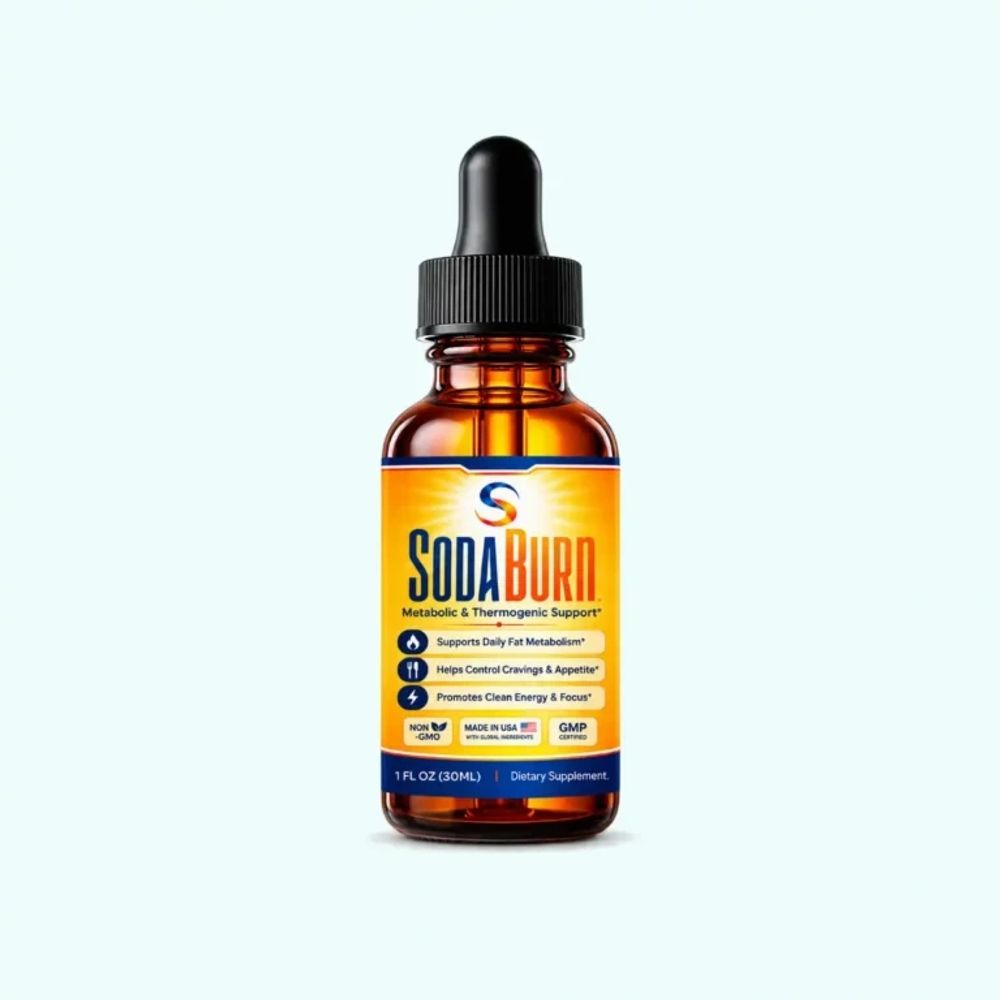
Soda Burn Drops Supplement
Soda Burn Drops are marketed as a liquid dietary supplement associated with weight management.
Soda Burn Drops are marketed as a liquid dietary supplement associated with weight management.
Weight loss is a long-term goal for many people, but finding an approach that is realistic, safe, and sustainable can be challenging.
The growing popularity of dietary supplements has created countless products that promise to support metabolism, reduce appetite, increase energy, or accelerate fat loss.
Liquid supplements such as Soda Burn Drops may attract consumers who want a convenient addition to their weight-management routine.
Before using any supplement, however, it is important to look beyond the marketing message. A product may be easy to take, but that does not automatically mean it will produce meaningful weight loss.
The ingredients, dosage, evidence, product quality, and individual health circumstances all matter.
The National Institutes of Health explains that many dietary supplements marketed for weight loss have limited scientific evidence supporting their effectiveness.
Soda Burn Drops are marketed as a liquid dietary supplement for people interested in weight management. A liquid format may be convenient for consumers who prefer drops to capsules or tablets.
The important question is not simply whether a product is a liquid supplement, but what it actually contains and whether its ingredients
have been adequately studied.
Before purchasing or using the product, consumers should review the current label for:
This information can help consumers make a more informed decision.
Weight loss can involve significant lifestyle changes. People may struggle with portion sizes, cravings, busy schedules, stress, lack of sleep, or difficulty finding time for exercise.
Because of these challenges, the idea of a supplement that can provide additional support is appealing.
However, a supplement should not be considered a replacement for a healthy lifestyle. Even if a product provides some benefit, that benefit needs to fit within a broader strategy involving appropriate nutrition, physical activity, sleep, and other healthy behaviors.
The potential effectiveness of Soda Burn Drops depends on the ingredients and dosage in the specific formulation.
Some ingredients used in weight-management supplements have been researched for possible effects on appetite, energy expenditure, or body weight.
However, evidence varies considerably, and not every ingredient has been shown to produce meaningful results.
It is also important to distinguish between research on an ingredient and research on a finished product.
If an ingredient has been studied independently, that does not necessarily prove that a particular supplement containing it will have the same effect.
The strongest evidence would involve controlled human studies examining the actual finished product at an appropriate dose.
Many weight-loss supplements use phrases such as “metabolism support” or “metabolism booster.”
Metabolism is the body's process of using energy to maintain normal functions and support physical activity. It is influenced by body composition, age, genetics, activity level, food intake, sleep, and other factors.
A small increase in energy expenditure does not necessarily result in substantial weight loss.
For this reason, consumers should avoid assuming that a product advertised as a metabolism booster will automatically cause significant fat loss.
“Fat burning” is another popular term in the weight-loss industry.
The body naturally uses stored fat for energy, and the amount of fat being used at a particular moment can change depending on activity,
food intake, and other conditions.
An increase in fat oxidation does not automatically equal a large reduction in total body fat.
For meaningful weight loss, the overall pattern over weeks and months matters more than a temporary change in how the body uses energy.
Although weight management is more complicated than simply counting calories, energy intake remains an important factor.
If a person consistently consumes more energy than the body uses, weight may increase over time. If intake is appropriately lower than expenditure, weight can decrease.
This does not mean that severe calorie restriction is advisable.
An overly restrictive diet can be difficult to sustain and may make it harder to obtain adequate nutrients. A moderate and individualized approach is generally more practical.
A healthy eating pattern provides the foundation for long-term weight management.
Meals can emphasize vegetables, fruit, whole grains, legumes, lean proteins, and appropriate sources of healthy fats.
Protein can support muscle maintenance and contribute to fullness. Fiber can also help with satiety and digestive health.
Useful fiber sources include:
Building satisfying meals can make it easier to maintain an appropriate calorie intake without relying entirely on appetite-suppressing products.
Physical activity is an important part of a healthy lifestyle.
Aerobic activities such as walking, cycling, swimming, dancing, and jogging can support cardiovascular health and increase energy expenditure.
Resistance training can support muscle strength and help maintain lean mass during weight loss.
People who are new to exercise can start gradually. A consistent walking routine, for example, may be more sustainable than an extremely demanding workout program.
Sleep is often overlooked when people discuss weight management.
Inadequate sleep can affect energy, mood, appetite, and motivation. It may also make healthy food choices and regular exercise more difficult.
❗🤩MUST SEE: (EXCLUSIVE OFFER) CLICK HERE TO VIEW PRICES AND AVAILABILITY🎯
Establishing consistent sleep and wake times, creating a relaxing nighttime routine, and reducing unnecessary distractions before bed can support better sleep.
A supplement should not be viewed as a substitute for adequate rest.
Stress can influence food choices and daily routines.
Some people experience increased appetite during stressful periods, while others may skip meals or rely on convenient processed foods.
Finding practical ways to manage stress can therefore support weight-management goals.
Walking, hobbies, breathing exercises, social connection, and structured daily routines are examples of strategies that may help.
Consumers should be skeptical of products that promise dramatic results in a short period.
Claims such as “lose weight overnight,” “burn fat while sleeping,” or “guaranteed results” are warning signs.
The FDA has warned consumers about fraudulent weight-loss products and unrealistic claims.
Healthy weight management is generally gradual, and individual results can vary substantially.
Customer reviews and before-and-after photographs can be persuasive, but they do not establish that a supplement caused the reported weight loss.
A person may have changed their diet, exercise routine, sleep habits, or other behaviors at the same time.
Body weight can also fluctuate naturally due to water retention, sodium intake, carbohydrate intake, digestion, and other factors.
Scientific studies are therefore much more useful for determining whether a supplement has a reliable effect.
The safety of a weight-loss supplement depends on its ingredients and the individual taking it.
Some products contain stimulant ingredients that may cause:
The NCCIH notes that many supplements marketed for weight loss have not been adequately tested for safety and that some products have been found to contain undeclared ingredients.
❗🤩MUST SEE: (EXCLUSIVE OFFER) CLICK HERE TO VIEW PRICES AND AVAILABILITY🎯
Consumers should be particularly careful when purchasing supplements from unfamiliar sources.
Dietary supplements can interact with prescription and over-the-counter medications.
This is one reason people taking medication should not assume that an over-the-counter supplement is automatically safe.
A healthcare professional can help determine whether an ingredient may interfere with a medication or increase the risk of side effects.
Professional guidance is especially important for people who:
A doctor, pharmacist, or registered dietitian can help assess individual circumstances.
Instead of depending on a single product, consider building several healthy habits.
Include nutritious foods from different food groups.
These nutrients can help create satisfying meals.
Pay attention to serving sizes without making food unnecessarily restrictive.
Increase walking and other enjoyable forms of physical activity.
Include resistance exercises when appropriate.
Make adequate rest a priority.
Use healthy strategies to deal with stressful situations.
Focus on gradual improvements rather than extreme short-term changes.
Not necessarily.
Some people may choose to use supplements as part of their personal health routine, but there is no requirement to use a weight-loss supplement to pursue healthy weight management.
For many people, the most valuable investments may be nutritious food, exercise opportunities, sleep, professional nutritional guidance, or other lifestyle improvements.
If someone is struggling to lose weight despite consistent efforts, it may be more useful to speak with a healthcare professional than to keep trying different supplements.
Soda Burn Drops may be marketed as a convenient way to support weight-management goals, but consumers should maintain realistic expectations.
The product's effectiveness cannot be established simply by its name or promotional claims. The current ingredient list, dosage, quality of evidence, and safety profile all need to be considered.
Most importantly, no weight-loss supplement should replace healthy eating, regular physical activity, adequate sleep, and appropriate medical care.
If you are considering Soda Burn Drops, review the current product label carefully and discuss it with a healthcare professional if you take medication or have an underlying health condition.
Sustainable weight management is usually built through habits that can be maintained over time—not through promises of instant or effortless transformation.
Disclaimer: This article is for general educational purposes and does not constitute medical advice. Supplement formulations and evidence can change, and individual responses vary. Consult a qualified healthcare professional before starting a dietary supplement.
We use cookies to analyze website traffic and optimize your website experience. By accepting our use of cookies, your data will be aggregated with all other user data.